
CAM High Yield Weekly Insights
(Bloomberg) High Yield Market Highlights
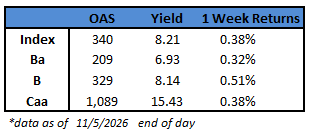
- US junk bonds stalled for a second straight session Thursday as resilient jobless-claims data overshadowed pockets of AI-related job cuts, fueling bets that the Federal Reserve will raise interest rates in December. Sharply rising Treasury yields added to the pressure, pushing junk-bond yields higher across ratings and driving negative returns.
- The selloff gathered pace as the Treasury rout reignited inflation fears and New York Fed President John Williams joined a growing chorus of officials calling for further policy action, warning that inflation remains “far too high” even after the latest data.
- New York Fed President’s call for action came after Fed Governor Christopher Waller said a December hike would be appropriate, a view since echoed by Governor Michelle Bowman and Dallas Fed President Lorie Logan. Logan went further, calling for at least two quarter-point increases and signaling they may need to come at a faster pace
- The 5- and 10-year Treasury yields rose by 15 and 13 basis points, respectively, to close at 4.97% and 5.13%. BB yields closed at 6.99% and single-B yields at 8.22%
- The risk-off tone deepened as the leadership crisis at Nvidia Corp. revived concerns about the vulnerability of the broader artificial intelligence industry and the durability of AI-fueled growth.
- The mounting risk aversion froze the primary market, with no new bond sales launched or priced. The primary market may remain cautious ahead of the weekend.
(Bloomberg) US Core CPI Rises by More Than Forecast, Supporting Fed Hike
- A key gauge of US consumer prices posted another firm advance in October, keeping the Federal Reserve on track to raise interest rates next month.
- The consumer price index, excluding food and energy, rose 0.3% from a month earlier, according to Bureau of Labor Statistics data out Tuesday, topping estimates for a third straight month. Overall prices jumped 0.4% as the cost of essentials climbed across the board.
- The report suggests price pressures continued to build just ahead of this month’s midterm elections, when Democrats retook both chambers of Congress following campaigns largely focused on the cost of living. The Iran war, tariffs and the data center boom have all helped fan inflation this year.
- It’s the last CPI report Fed officials will see before their Dec. 8-9 policy meeting. Investors expect them to raise interest rates at that gathering to counter inflation, following a quarter-point increase in September and a decision to leave rates unchanged in October.
- The BLS didn’t publish year-over-year changes because data collection was interrupted last October during the government shutdown.
- The report showed broad-based increases across a range of everyday goods and services. Grocery prices rose by the most since April, including a record 5.1% surge in baby food and formula prices.
- Owners’ equivalent rent, a gauge of housing costs that is the largest component of the CPI, rose 0.3%. Electricity prices jumped 0.9%, and motor vehicle insurance prices advanced by the most in more than a year.
- Gasoline rose 1% in October, though oil prices have plummeted over the last week amid rising optimism around diplomatic efforts to end the war in the Middle East. Other categories suggested the energy shock continues to filter through the economy: Airfares rose 0.4%, while delivery services prices also increased.
- Broader services prices excluding energy and rents climbed 0.4%, according to data compiled by Bloomberg. Health insurance prices fell by the most in more than three years after the BLS incorporated in October a semi-annual update using industry data on premiums and benefits, though a wide range of other medical care services showed the biggest increases in several months.
- Recreation services prices rose last month by the most this year.
- Core goods prices rose 0.2%, even as used-car prices declined. Categories particularly exposed to tariffs — including household furnishings, appliances and toys — saw material price increases.
This information is intended solely to report on investment strategies identified by Cincinnati Asset Management. Opinions and estimates offered constitute our judgment and are subject to change without notice, as are statements of financial market trends, which are based on current market conditions. This material is not intended as an offer or solicitation to buy, hold or sell any financial instrument. Fixed income securities may be sensitive to prevailing interest rates. When rates rise the value generally declines. Past performance is not a guarantee of future results.