
CAM High Yield Weekly Insights
(Bloomberg) High Yield Market Highlights
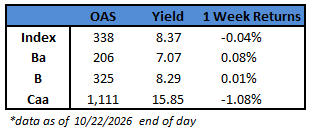
- US junk bonds showed resilience amid a broad move to shed risk, eking out small gains as yields fell for a second straight session on Thursday despite plunging equities, surging oil prices and escalating Middle East tensions. The market also looked past concerns over an AI-fueled debt wave, with yields lower across ratings except CCCs.
- CCC yields surged to close at 15.85%, the highest since the pandemic. CCC spreads widened 33 basis points to close at 1,111, a new four-year high.
- Risk premiums jumped to a 17-month high on expectation of a supply boom fueled by AI expansion. “We remain cautious on spreads,” Barclays strategists Brad Rogoff and Dominique Toublan wrote on Friday. AI-driven supply is expected to keep a lid on short-term spread tightening, Barclays wrote.
- The primary market continued to be cautious amid persisting uncertainty over the stability of the artificial intelligence industry and issuance overhang fueled by AI buildup.
- The market priced just one deal on Thursday, driving the week’s volume to $3.4b amid broad risk-off sentiment during the week.
(Bloomberg) US Consumer Sentiment Slips to Five-Month Low on Inflation
- US consumer sentiment edged down to a five-month low in October as high prices and rising interest rates depressed morale.
- The University of Michigan’s final sentiment index eased to 48 from 48.1 in September, according to the survey released Friday. Even so, that was an improvement from the preliminary reading and topped all estimates in a Bloomberg survey of economists.
- Consumers expect prices to rise 4.7% over the next year, up from 4.6% in the previous month. They also saw costs climbing at an annual rate of 3.5% over the next five to 10 years. Both were the highest since May.
- “After five years of above-target inflation, both short- and long-term inflation expectations have ticked up in recent months, exposing risks that elevated inflation expectations could become entrenched,” Joanne Hsu, director of the survey, said in a statement.
- Consumer sentiment continued to deteriorate in October amid persistent inflation, tepid hiring and elevated mortgage rates. Prices at the pump remain well above $4 a gallon, compounding longstanding frustrations with the cost of living.
- In recent months, price increases have outpaced pay gains, further pressuring household budgets. Data out last week showed consumer prices rose in September at the fastest pace in five months.
- Economic issues like the cost of living remain front and center for Americans in the final stretch of midterm campaigns.
- “Consumers of all political persuasions agree that inflation is overwhelmingly the greater risk to the economy in the year ahead than unemployment,” Hsu said.
- Sentiment among Democrats and Republicans improved somewhat in October, while sentiment among independents fell for a third straight month.
- A gauge of buying conditions for durable goods fell to a record low in October, with the report citing higher interest rates and rising affordability concerns. Nearly 70% of consumers expect interest rates to rise in the year ahead, the highest in more than three years.
- The current conditions gauge sank to the second lowest on record, while an index of consumer expectations improved for the first time since July.
- The survey period includes responses from Sept. 22 to Oct. 19.
(Bloomberg) US Housing Headwinds Build as Mortgage Rates Climb
- Housing construction – one of the economic sectors most sensitive to interest rates – is facing intensifying headwinds as mortgage rates have moved significantly higher. Housing starts fell sharply in September, with declines in both single and multifamily construction. Building permits, a leading indicator of future construction, also remained weak, particularly for single-family homes. Higher financing costs are compounding an already severe affordability squeeze from elevated home prices, property taxes and insurance costs.
- Housing starts declined 5.2% in September to an annualized pace of 1.221 million, below the consensus forecast of 1.305 million
This information is intended solely to report on investment strategies identified by Cincinnati Asset Management. Opinions and estimates offered constitute our judgment and are subject to change without notice, as are statements of financial market trends, which are based on current market conditions. This material is not intended as an offer or solicitation to buy, hold or sell any financial instrument. Fixed income securities may be sensitive to prevailing interest rates. When rates rise the value generally declines. Past performance is not a guarantee of future results.