
CAM High Yield Weekly Insights
(Bloomberg) High Yield Market Highlights
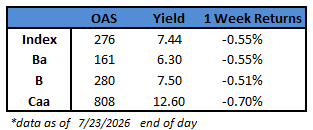
- US junk-bond yields and risk premiums surged the most in four months as rising crude prices, a resilient labor market and escalating tensions with Iran reignited inflation concerns. Yields climbed to a nearly four-month high after rising for five straight sessions, the longest streak since November, triggering the biggest one-day loss since March.
- The selloff swept across the US high-yield market, driving CCC yields and spreads to 15-month highs. BB yields rose for a fifth straight session to finish near a four-month high of 6.30%
- The broad risk-off mood spilled into the primary market, bringing issuance to a near standstill with no new bond sales launched and just one deal pricing.
(Bloomberg) US Initial Jobless Claims Fall to Lowest Level Since 1969
- First-time applications for US unemployment benefits fell last week to the lowest level since 1969, signaling layoffs remain muted in a stable labor market.
- Initial claims fell by 22,000 to 187,000 in the week ended July 18, according to Labor Department data released Thursday. The median forecast in a Bloomberg survey of economists called for 210,000 applications.
- Continuing claims, a proxy for the number of people receiving benefits, was little changed at 1.8 million in the previous week.
- The low level of claims suggests employers remain reticent to lay off workers. Still, last month’s jobs report showed many Americans left the labor force, which could also help explain fewer filings for unemployment insurance.
This information is intended solely to report on investment strategies identified by Cincinnati Asset Management. Opinions and estimates offered constitute our judgment and are subject to change without notice, as are statements of financial market trends, which are based on current market conditions. This material is not intended as an offer or solicitation to buy, hold or sell any financial instrument. Fixed income securities may be sensitive to prevailing interest rates. When rates rise the value generally declines. Past performance is not a guarantee of future results.