
CAM High Yield Weekly Insights
(Bloomberg) High Yield Market Highlights
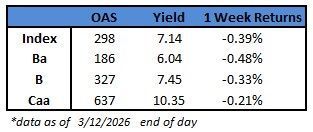
- US junk bond yields soared and risk premiums approached 300 basis points fueling the biggest one-day loss in nearly a year, as fears of higher oil prices and inflation rattled markets. The energy sector accounts for more than 11% of the US high yield index.
- The selloff comes as the private credit market shows signs of stress, with redemptions mounting and withdrawals being blocked. Yields jumped the most in nearly a year, and losses spanned across ratings. BB yields surged to close at an eight-month high.
- Middle East risks, sticky inflation and private credit stress are headwinds for Treasury yields and spreads, Barclays strategists Brad Rogoff and Dominique Toublan wrote in note. However, solid fundamentals and strong demand for yield should limit the downside, they wrote
- CCCs, the riskiest part of the junk bond market, racked up the most losses in four months. Spreads closed at 637 basis points
- Oil markets brushed aside the largest-ever release of emergency energy stockpiles as President Donald Trump said that preventing Iran from having nuclear weapons and threatening the Middle East is “of far greater interest and importance to me” than the cost of oil
- In the primary market, US borrowers shrugged off elevated volatility and moved off the sidelines
- Two more deals for more than $1b priced on Thursday driving the week’s tally to $4.6b and March’s volume to nearly $10b. Additionally, the market is readying for a crowded calendar next week.
This information is intended solely to report on investment strategies identified by Cincinnati Asset Management. Opinions and estimates offered constitute our judgment and are subject to change without notice, as are statements of financial market trends, which are based on current market conditions. This material is not intended as an offer or solicitation to buy, hold or sell any financial instrument. Fixed income securities may be sensitive to prevailing interest rates. When rates rise the value generally declines. Past performance is not a guarantee of future results.